 Connected
Get a pet together when both of you freely want the commitment and you have a realistic plan for daily care, costs, housing, backup help and changes in your lives. If one person is reluctant or a major care need remains uncovered, wait. A pet depends on the care you can provide on ordinary difficult days, not just the enthusiasm you feel when looking at photos.
You don't need a perfect life or identical levels of excitement. You do need an honest agreement about what each person is taking on. This guide helps you make that agreement before choosing an animal; ask a veterinarian, shelter or other qualified animal-care professional about the needs of a specific pet.
Evidence, with the context kept in
Veterinary access belongs in the readiness conversation.

What this does and doesn't tell us: APPA is a pet-industry trade association. The public release does not give the detailed sample methodology for this item. Concern is not the same as inability to obtain care.
Put it to use: Before committing, contact a local veterinary practice about accepting new patients, routine costs and urgent-care options. A national spending average cannot replace those answers.
Get the chart, data and citation
The numbers come from the source linked above; Connected created the chart. These are published statistics, not an original Connected study.
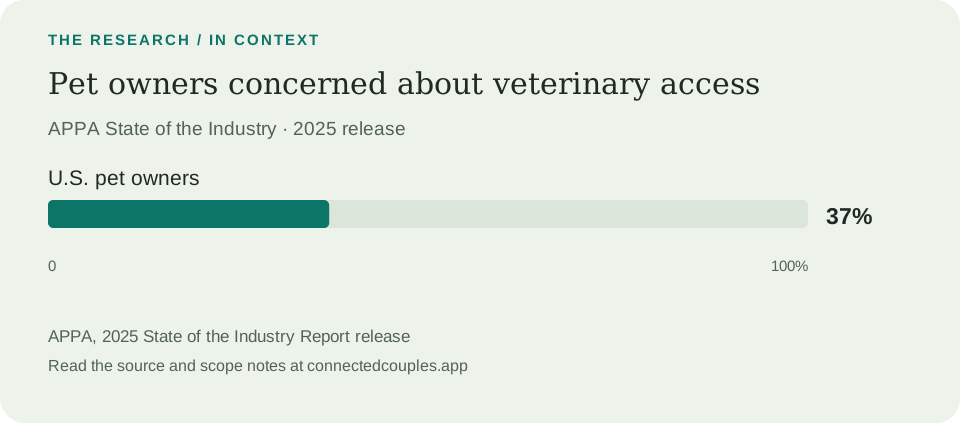
APPA, 2025 State of the Industry Report release. APPA State of the Industry · 2025 release. Chart by Connected Editorial Team, October 2, 2026. Please retain the source, date and scope when sharing.
Would you still say yes if your partner was not asking?
Ask each other: “If I were not pushing for this, would you want a pet in our household now?” Make room for yes, no and “I need more information.” A hesitant yes given to avoid disappointing a partner isn't a reliable care plan.
Discuss what each person imagines. One might picture a quiet companion at home; the other might want a dog for long outdoor adventures. Someone may love animals and still dislike the restrictions that come with daily care. Another may worry about allergies, sleep, mess, travel or losing flexibility.
Take those concerns literally. “You will fall in love once it arrives” leaves the reluctant person with a commitment they did not choose. Surprising a partner with an animal also removes the chance to plan properly.
For dogs specifically, the American Veterinary Medical Association advises avoiding impulsive decisions and involving the household in choosing an animal suited to its circumstances. AVMA on selecting a pet dog
Check what is ready and what still needs a plan
Work through the checklist together. For each area, choose ready when there is a workable agreement, needs a plan when you need information, and not yet when a requirement is unmet or someone doesn't consent. This isn't a score. You might have the right home and enough savings but still have nobody available at a time the animal needs care.

Read the graphic as text
Before adopting a pet
Readiness is a shared decision
01: Enthusiasm. Do both people genuinely want this pet?
02: Care. Can we meet its daily care and training needs?
03: Costs. Have we planned routine and unexpected expenses?
04: Housing. Is the pet permitted, and is the home suitable?
05: Backup. Who provides care during travel or illness?
06: Long-term plan. Can we sustain care as our lives change?
For each: ready / needs a plan / not yet. A “not yet” is valid.
| Area | Ready means | Needs a plan or not yet means you should ask |
|---|---|---|
| Enthusiasm | Both people freely want the commitment | Is someone agreeing mainly to avoid conflict? |
| Daily care | Named adults can cover the actual routine | Which task or time of day is uncovered? |
| Costs | You've researched expenses and agreed how to pay | What have we guessed or left out? |
| Housing | The animal is permitted and the setting is suitable | What permission or suitability check is missing? |
| Backup | Willing, suitable backup care is confirmed | Who has actually agreed to help? |
| Long-term plan | You've discussed foreseeable changes | What happens if work, housing or the relationship changes? |
Give each unfinished area a next step: call the shelter, check a lease, ask a potential sitter or get a cost estimate. “Not yet” might mean waiting or reconsidering the kind of animal you could care for. You can love each other and still decide this isn't the right commitment.
“Talk through the day when neither of you feels like doing the work. A shared pet needs a reliable care plan on that day, too, and ‘you'll probably do it’ isn't a fair plan.”
Kayla Crane, LMFT
Who is on duty when you both get home late?
Instead of asking only “Who will feed the pet?”, run through a day when you're both tired, work runs late and it is raining. Who notices what needs doing? Who does it? Who arranges cover? What happens when your usual person can't help?
Write a care plan with four fields for each recurring task:
- The task and the animal-specific timing you've confirmed
- The person responsible for completing it
- The backup who has agreed to cover it
- How you'll tell each other the task is done or cover is needed
The list will differ by animal. For a dog it may include walks and outdoor breaks; for a cat, litter care and play; other animals have different space, feeding, enrichment and cleaning needs. Don't assume that small animals require little work or that one species is automatically an easy substitute for another.
Agree on who manages appointments, orders supplies and coordinates paid care as well as who handles hands-on tasks. Connected's guide to the mental load in relationships is useful if one person keeps becoming the household reminder system.
Find out what you would actually spend
Research the actual costs for the pet and location you're considering. Your list might include the initial fee, equipment, food, routine veterinary care, training, grooming, transport, boarding, identification and unexpected care needs. Some categories will not apply; others may be substantial.
Ask how you would pay, what amount either person could spend without a conversation, and which decisions you would make together. Look carefully at exclusions and terms if considering insurance. A quote is information, not a promise that every future expense will be covered.
ASPCA's adoption guidance highlights the need to account for space, time and financial capacity, including unplanned veterinary and boarding expenses. It also recommends asking shelter staff to help find a dog that fits your actual lifestyle. ASPCA adoption preparation guidance
If your plan only works when nothing goes wrong, identify the gap before committing. Avoid adopting first and assuming that future enthusiasm will produce extra time or money.
The care gap that enthusiasm can't cover
Take Dani and Chris, a fictional couple who both want a dog. Dani works from home twice a week, and Chris initially assumes that makes daily care manageable. When they map the entire week, they find three days when both are away for long stretches.
They ask a shelter about the needs of dogs they're considering and investigate suitable paid care. A friend says they can help occasionally, but can't offer a recurring commitment. Dani also clarifies that working from home doesn't mean being continuously available.
They are ready on enthusiasm and permitted housing, need a plan for costs, and mark daily care not yet because it is uncovered. They decide not to adopt yet. Chris gathers actual care quotes; Dani checks whether either work schedule can change. They set a date to review the information rather than repeatedly sending each other dog photos as persuasion.
If the gap can be covered reliably, they can reconsider. If it can't, waiting protects both the animal and their relationship. Choosing a different pet would require a new needs assessment, not an assumption that another animal solves the problem.
What happens when your plans change?
Consider travel, moving, job changes, illness and the possibility that one person can't continue the same care role. Ask a backup person directly rather than assigning a relative by assumption.
Also discuss separation. Who could provide a stable home? What records would need updating? What would you do if you disagreed? A private conversation can clarify intentions, but ownership rights, contracts and enforceability vary. Seek local legal advice for legal questions; this worksheet isn't a pet custody agreement.
If you're also planning to share a home, Connected's moving-in-together questions cover the wider household decisions. Pet care deserves its own plan within that conversation.
If you disagree about readiness
One person promises to do everything. Make the scope concrete. Even a primary caregiver's plan affects shared space, noise, visitors and travel. Discuss the household impact and a backup that doesn't depend on the other person changing their mind.
You want a pet to bring you closer. Ask whether the existing issues need attention first. An animal creates a care commitment; it shouldn't carry responsibility for repairing your relationship.
You can't agree on the animal. Compare needs and constraints before appearance. Ask qualified staff about the individual animal rather than relying on a breed description or social-media account alone.
You want to try before committing. Volunteering or agreed pet-sitting may help you learn about care. Fostering is itself a real responsibility with organization-specific terms. Don't treat an animal as a disposable relationship experiment.
Try it on a difficult day
When your sitter cancels before the adoption is final
Fictional example
The couple's plan depends on a friend covering long workdays. The friend can no longer help. Both still want the pet, but the gap in care remains.
- Ask the adoption organization or veterinary professional what care the particular animal needs. Do not substitute enthusiasm for species- and age-appropriate coverage.
- Confirm another willing caregiver or service, including availability and price. 'We'll find someone' is still an open question.
- If the gap cannot be covered, delay the commitment. Revisit when the arrangement changes rather than expecting one partner to leave work whenever help falls through.
The useful review: Before either person pays a deposit or makes a final commitment, read the hard-day plan aloud and check that every essential task has coverage.
Make it yours
Find the missing piece in your pet plan
An unanswered care or consent question is a reason to pause. This worksheet does not produce a readiness score or choose an animal for you.
Your entries stay in this tab and are not sent by this worksheet. Download your draft before closing or reloading; it is not saved automatically.
Your draft to discuss together
Check that both people agree before treating this as a commitment. Blank items remain open questions.
Common questions
How long should we be together before getting a pet?
Relationship length alone can't answer the readiness question. Look at whether you can make a shared decision, follow through on responsibilities and cover the animal's needs now and through foreseeable changes.
Is it okay if one person does more care?
Yes, if the arrangement is freely agreed and sustainable. Name the work, include backup, and revisit the agreement when circumstances change. “More” shouldn't quietly become “everything, forever.”
What should we do tonight?
Each choose the readiness area you're least certain about and identify one fact to find. If you also want an easy opening for regular couple conversations, try Connected for daily questions and a weekly check-in alongside the practical planning you do separately.
Sources & editorial notes
Published by the Connected Editorial Team, with a quote from Kayla Crane, LMFT. Examples are fictional. The worksheets and graphics are original editorial planning aids, not validated assessments or a substitute for professional care.
- APPA, 2025 State of the Industry Report release
APPA State of the Industry · 2025 release. APPA is a pet-industry trade association. The public release does not give the detailed sample methodology for this item. Concern is not the same as inability to obtain care.
- AVMA on selecting a pet dog
AVMA recommends deliberate household-involved dog selection based on lifestyle and care capacity; draft avoids dog-specific guidance generalized to every animal.
- ASPCA adoption preparation guidance
ASPCA advises preparing for space, time and costs, unplanned vet/boarding expenses, and consulting shelter staff about lifestyle fit.