 Connected
Couples with different food preferences can share mealtimes without eating identical meals. Start with ingredients you both enjoy, keep some additions separate, and agree who plans, shops, prepares, and cleans up. Respect restrictions and firm boundaries rather than treating every difference as something one partner should overcome.
The frustrating part may not be the food itself. It may be answering “What do you want?” every evening, feeling that a rejected meal is a rejected effort, or becoming the person who cooks two dinners by default.
Start with a modest goal: both people have something they want to eat, and dinner does not create an argument about whose turn it is to make a second meal. The suggestions below concern planning and communication; nutritional and medical needs call for appropriate individual advice.
Evidence, with the context kept in
The work continues after choosing what to eat.

What this does and doesn't tell us: These are different denominators. The averages include food preparation and cleanup, not a complete measure of meal planning or every simultaneous task.
Put it to use: Divide shopping, preparation and cleanup as well as choosing the menu. Two different plates need not mean one person doing two complete jobs.
Get the chart, data and citation
The numbers come from the source linked above; Connected created the chart. These are published statistics, not an original Connected study.
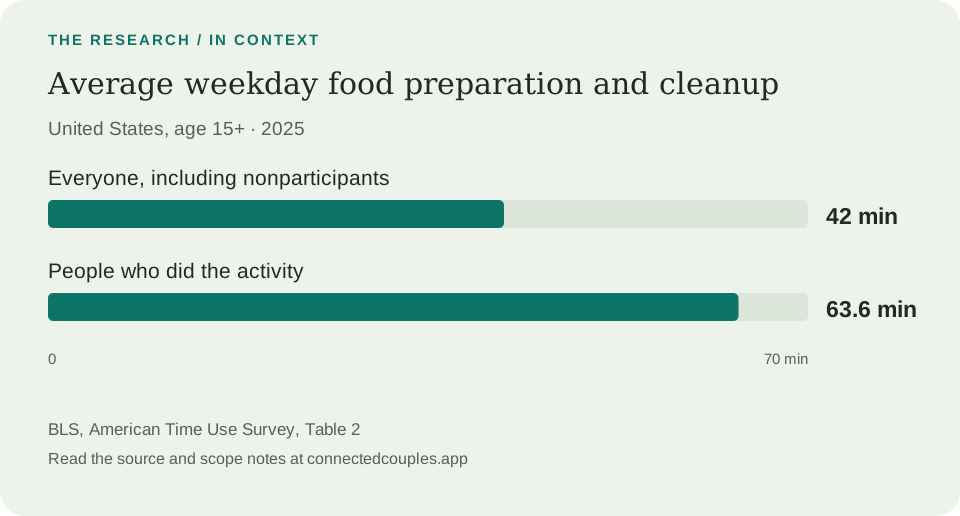
BLS, American Time Use Survey, Table 2. United States, age 15+ · 2025. Chart by Connected Editorial Team, October 2, 2026. Please retain the source, date and scope when sharing.
Describe the difference precisely
“Picky” and “difficult” do not tell you what to buy. Ask each other which part of a meal does or does not work: an ingredient, texture, flavor, preparation method, or the unpredictability of something unfamiliar.
Make three short lists separately:
- Foods or meals you reliably enjoy
- Things you might choose sometimes or try voluntarily
- Restrictions and firm boundaries that the plan must respect
You do not have to justify every preference with a health reason. At the same time, allergies and medically necessary restrictions must not be treated as ordinary preferences that can be negotiated away. Follow the person's established requirements and appropriate professional guidance. Never hide an ingredient or pressure someone to test a restriction.
Religious or ethical commitments deserve a clear discussion too. Someone may be comfortable sharing a kitchen but not preparing a particular food themselves. Ask what participation they can freely agree to; do not assume buying an ingredient obliges them to cook it.
Build from the overlap rather than the disagreement
Look for a base you both like, such as rice, noodles, potatoes, or another familiar component. Add shared ingredients, then let each person choose separate finishing elements where that is practical and appropriate.

Read the graphic as text
One meal, room for two
A shared base with flexible branches
BASE: Choose a base both enjoy. Example: rice or noodles, with shared vegetables.
BRANCH A: One set of additions. Add one partner’s preferred protein or sauce.
BRANCH B: Another set of additions. Keep the other person’s additions separate.
SHARED WORK: Own preparation and cleanup. Agree who does each part before cooking begins.
An example planning method, not nutrition advice. Handle allergies separately.
Choose a base both enjoy, identify shared components, list separate additions, and assign preparation and cleanup. Adapt the examples below to your own requirements; they are not instructions for managing allergies.
| Shared starting point | Keep separate | Decide before cooking |
|---|---|---|
| Rice with ingredients you both enjoy | Preferred sauce or other additions | Who prepares each extra component |
| Pasta with an agreed base sauce | Extra seasoning or toppings | Whether a portion should be set aside first |
| Baked potatoes | Different fillings | Which fillings need separate preparation |
| A selection of small dishes | Each person's individual choices | What is actually shared and what belongs to one person |
This approach works only if it reduces effort in your household. A meal with six separate pans may be less practical than two simple dinners. You can abandon a clever format if nobody enjoys using it.
Keep a short list of meals that worked. Include the detail that made them work, such as “sauce on the side” or “both liked the roasted version.” You will then be choosing from actual experience instead of starting a new negotiation each evening.
Plan the work as well as the menu
Before shopping, check what you already have and which evenings realistically allow cooking. N.C. Cooperative Extension recommends keeping a list of favorite meals and looking at the week's commitments before filling in a meal plan. Those are useful logistics even when two people prefer different plates. Read the extension service's meal-planning advice.
The University of Minnesota Extension also advises checking the household calendar and adapting a meal plan when schedules change. Apply that by planning a simple option on the evening one of you will be late, rather than counting on help that will not be available. Read the university's meal-planning guidance.
Name responsibility for the entire process:
- Who checks supplies and chooses the agreed meal?
- Who adds the separate ingredients to the list?
- Who shops or arranges the groceries?
- Who prepares the shared and individual components?
- Who handles dishes and the remaining food afterward?
“Cook what you like and I will sort myself out” can be a good agreement. It is less workable if “sort myself out” means asking the cook to stop halfway through and make something else.
Responsibility does not have to be identical. One person might cook more while the other does more planning and cleanup. Make the distribution visible and review it against capacity and effort. The broader guide to mental load in relationships can help if only one person is doing the noticing and deciding.
Agree on a fallback before dinner goes wrong
Keep a few independently manageable options available within your own requirements. Each person should know what they can choose if they do not want the planned meal or cannot be there at the expected time.
The fallback should not be a punishment. “You can make your own dinner” can be a neutral plan or a hostile dismissal depending on the agreement and tone. Try: “I am making the meal we chose. If you want something different tonight, your usual option is there, and we can still sit together.”
Agree when a change needs to be communicated. If someone has already shopped and started cooking, notice that work even if you cannot eat the meal. If a plan changes repeatedly, revise the plan rather than replaying the same surprise.
Dinner when one person wants variety and the other wants familiar food
Take this fictional couple: Priya enjoys strong flavors and trying new dishes. Alex prefers familiar meals with components kept separate. Priya has become the default planner and feels bored; Alex feels judged whenever a new meal appears without warning.
They identify three meals they both like. For one evening, they choose rice and shared vegetables, with separate sauces and preferred additions. Priya prepares the shared base and chooses a sauce. Alex handles the separate additions and cleanup. They confirm the division before cooking.
Another evening becomes an independent-dinner night. They still sit together when their schedules allow, but nobody makes two meals for the other person. Priya can try a new dish without turning it into a test Alex must pass.
When they review the week, the important questions are whether each person ate something they wanted and whether the labor stayed reasonable. If the separate additions made the shared meal too complicated, they simplify the next version. Neither person has to claim their taste changed for the plan to count as useful.
“You can care about the person who cooked and still not want the food. Thank them for the effort, be clear about what works for you, and help make a plan that does not leave them cooking two dinners.”
Kayla Crane, LMFT
When a meal means more than dinner
Cooking may be a way someone expresses affection or shares a family memory. If the food matters to you, explain that meaning without making eating it proof of love: “This reminds me of my grandfather, and I would like to tell you about it.” Your partner can be interested in the story even if they decline the dish.
If you are declining, acknowledge the effort without pretending: “Thank you for making this. That texture does not work for me, so I will use our fallback.” Avoid contempt about what the other person enjoys.
When the disagreement feels bigger than dinner, use difficult conversations with your partner to prepare a conversation outside mealtime. Talk about the extra work, feeling overlooked, or pressure to participate rather than arguing over whether an ingredient is objectively good.
If you still cannot agree about dinner
We have almost no overlap. Plan separate meals and share the time if you want to. Agree how to use the kitchen without one person becoming responsible for both menus. A shared drink or conversation can provide company without identical food.
One person always chooses the restaurant. Look at menus together before deciding and make sure both people have a genuinely acceptable option. Rotate choices among places that meet that condition, rather than taking turns enduring meals.
The cook feels unappreciated. Acknowledge the planning and preparation explicitly. Also check whether the meals reflect both people's stated preferences. Gratitude should not require someone to eat food they do not want.
Preferences keep changing. Ask for updates before the next shop and keep the plan flexible. Persistent eating-related distress or medical questions deserve appropriately qualified support, beyond a meal worksheet.
Try it on a difficult day
Three dinners from the same shopping list
Fictional example
One partner likes familiar meals; the other likes variety. Instead of buying ingredients for six unrelated dinners, they agree on potatoes, rice, suitable vegetables and separate preferred additions. This is a fictional planning example, not a dietary prescription.
- Night one: baked potatoes, with each person choosing their own topping. Agree who prepares the shared base and who handles cleanup.
- Night two: rice bowls, with sauces and additions kept separate as needed. Check ingredients and cross-contact precautions if allergies are involved.
- Night three: use suitable ingredients left from the same shopping trip in each person's preferred way. Each person can prepare their own simple plate while sharing the table.
The useful review: At the end of the week, ask whether the plan reduced shopping, waste or duplicate effort. If the shared base suits only one person, change it.
Make it yours
Plan a meal that can branch
Use only ingredients and preparation methods that fit both people's safety needs. An allergy requires suitable precautions, not simply removing a topping afterward.
Your entries stay in this tab and are not sent by this worksheet. Download your draft before closing or reloading; it is not saved automatically.
Your draft to discuss together
Check that both people agree before treating this as a commitment. Blank items remain open questions.
Common questions
Do couples need to eat the same dinner?
No. You can share a table and have different food, or choose other ways to spend time together. The useful question is whether the arrangement works for both people and distributes the effort fairly.
Should the person with more preferences do all the cooking?
Not automatically. Decide based on capacity, skills, willingness, and the real work involved. Each person should respect the other's requirements, and no one should be assigned an endless second menu without agreement.
What can we try this week?
Choose one shared-base meal and one clear fallback, then review the workload. For a conversation that goes beyond meal planning, try Connected, which offers daily questions and weekly check-ins. Use a prompt to learn more about each other while keeping your practical food plan simple.
Sources & editorial notes
Published by the Connected Editorial Team, with a quote from Kayla Crane, LMFT. Examples are fictional. The worksheets and graphics are original editorial planning aids, not validated assessments or a substitute for professional care.
- BLS, American Time Use Survey, Table 2
United States, age 15+ · 2025. These are different denominators. The averages include food preparation and cleanup, not a complete measure of meal planning or every simultaneous task.
- N.C. Cooperative Extension Meal prep and planning
List favorite meals and review weekly commitments before writing a meal plan. No nutritional or financial outcomes claimed.
- University of Minnesota Extension Meal planning
Check household calendar, adapt plan when schedule changes; no relationship outcome promise.