 Connected
The quick answer
Good hobbies for couples include reading together, birdwatching, drawing, cooperative games, cooking, and dancing. The right choice depends on what you both enjoy, the time you have, and the effort involved in getting started. Choose one manageable session, then decide together whether you want another.
Start with the evening you actually have
You can like pottery and dislike driving across town after work. A useful shared hobby fits your ordinary limits. Use the filters to narrow the 30 ideas below.
Times are suggested minimum activity sessions, not completion promises; allow extra for travel, preparation, and cleanup. No new spending assumes existing supplies and any needed device, internet, or local access. Low cost suggests modest supplies; paid flags lessons, specialist equipment, or venue fees. These are illustrative categories, not current price quotes.
Adjust movement, seating, lighting, sound, and breaks to your needs. Online options can work from separate homes. For single outings, see our date night ideas; for bigger experiences, try the couples bucket list.
Free hobby finder · No signup
Find something you both want to try
Filter the ideas, then mark each person’s interest on the cards. You are making a shortlist, not scoring compatibility. Both people choose freely; an unchecked box is fine.
Time estimates exclude travel, setup and cleanup. No new spending assumes you already have the supplies or access. These are editorial estimates, not live prices.
Your choices and notes stay in this page until it is reloaded. This tool does not send or save them. A download saves a file on your device. Site analytics record page and app-link activity, not these notes.
Our shared hobby trial
Connected Couples · https://www.connectedcouples.app
A conversation draft, not an assessment. Both people can change their minds.
I want couples to have a successful experience of being known, even if the topic is ordinary.
Choose your kind of together
30 hobbies for couples, with a first step
Each person marks their own interest. Choices stay selected when you change filters.
No ideas match all those filters. Try allowing more time, another setting, or a different cost.
Quiet hobbies for couples at home
For evenings when being together sounds good and a big production does not. Leave a convenient stopping point so a short session still feels complete.
Reading aloud
First try: Choose a short chapter or poem from a book you own and take turns reading, if both enjoy speaking aloud.
Return to it: Leave a bookmark at the next passage and exchange one thought before putting the book away.
Both interested
Jigsaw puzzles
First try: Use an owned or borrowed puzzle on a tray that can move without dismantling your work.
Return to it: Choose a small region to tackle each time, sharing pieces without taking over your partner's section.
Both interested
Two-player card games
First try: With an existing deck, learn one two-player game and play an open-hand practice round.
Return to it: Keep the same rules for a few sessions so learning does not consume the whole evening.
Both interested
Crosswords together
First try: Open a freely available crossword and share the clues, allowing time for either person to think.
Return to it: Switch who enters answers, and save one unfinished puzzle for your next break together.
Both interested
Album listening
First try: Pick an album you can already access and listen to a few tracks without other tasks.
Return to it: Alternate selections and follow one musical detail, such as the bass line or arrangement, each session.
Both interested
Origami
First try: Cut existing scrap paper into squares and follow free instructions for one simple fold.
Return to it: Repeat that model until comfortable, then try a variation or a slightly more intricate design.
Both interested
Creative hobbies with something to explore
Make separate pieces beside each other or work on one project with distinct roles. Sharing a hobby does not require producing matching results.
Everyday drawing
First try: Use pencils and paper you own to draw an ordinary object from different angles.
Return to it: Keep the drawings and revisit the object later, experimenting with shadows instead of judging accuracy.
Both interested
Phone photography
First try: Use existing phones to photograph interesting light in a room or nearby public space.
Return to it: Each choose one image to discuss and one technique to experiment with next time.
Both interested
Watercolor painting
First try: Start with a small basic set, suitable paper, and a protected surface; practice blending two colors.
Return to it: Explore a different wash or brush mark each session before attempting a larger picture.
Both interested
Visible mending
First try: Practice a simple decorative stitch on scrap fabric with a needle and thread before repairing clothing.
Return to it: Each choose a small repair and share discoveries about stitches, leaving personal style decisions to the wearer.
Both interested
Pottery classes
First try: Book a beginner studio session after checking accessibility, lesson length, materials, and firing fees.
Return to it: Practice one forming technique across classes instead of expecting every piece to become a finished gift.
Both interested
Short fiction
First try: Using existing devices or paper, each write a tiny scene from a shared prompt.
Return to it: Read or send your scenes to each other, asking permission before offering suggestions.
Both interested
Outdoor hobbies that give you a reason to return
A familiar place can offer plenty to notice. Check local access and conditions, and choose distances and surfaces that work for both of you.
Birdwatching
First try: Observe birds from an accessible nearby spot, noting size, movement, and sounds without buying binoculars.
Return to it: Return to the same place and compare sightings before looking up one unfamiliar bird.
Both interested
Nature journaling
First try: With existing paper or a phone, record a tree's leaves, nearby sounds, and the weather.
Return to it: Revisit your subject across seasons and add observations without collecting plants or disturbing wildlife.
Both interested
Local walking or rolling routes
First try: Choose a nearby route with suitable surfaces, places to rest, and a turnaround point you both accept.
Return to it: Explore one adjoining street or path each time and keep notes on your favorite sections.
Both interested
Container gardening
First try: Choose one plant suited to your available light and climate, plus a container with drainage.
Return to it: Share watering responsibilities and check growth together, accounting for care needed between hobby sessions.
Both interested
Naked-eye stargazing
First try: From a safe accessible spot, use a free sky chart to look for one visible constellation.
Return to it: Observe at different times or seasons and compare what you can see without purchasing a telescope.
Both interested
Recreational cycling
First try: Use suitable maintained bikes and helmets, renting if needed, and choose a short route away from difficult traffic.
Return to it: Ride at a mutually comfortable pace and extend the route only when both want to.
Both interested
Hands-on hobbies for learning and moving
Pick an activity where the process interests both people. For kitchen hobbies, agree who cleans up so an experiment does not become extra domestic work for one partner.
Cooking techniques
First try: Choose a simple recipe built around one technique, and divide preparation into tasks you each want.
Return to it: Use that technique with a different ingredient, keeping notes on adjustments you enjoyed.
Both interested
Small-batch baking
First try: Choose a straightforward recipe that fits your equipment and dietary needs, allowing additional cooling time.
Return to it: Change one variable in the next batch and compare texture and flavor together.
Both interested
Social dance practice
First try: Try a beginner online lesson in a style you both like, asking about adapted movements if helpful.
Return to it: Practice one comfortable sequence between lessons and agree on touch and feedback preferences.
Both interested
Table tennis
First try: Find an accessible community table or venue and begin with gentle rallies using suitable equipment.
Return to it: Work toward a shared rally count before deciding whether either of you wants competitive games.
Both interested
Singing together
First try: Choose a familiar song in a comfortable range and sing along with music you already have.
Return to it: Try another verse or simple harmony, keeping volume and performance expectations comfortable for both.
Both interested
Knitting
First try: Use basic needles and yarn to learn a knit stitch on separate small practice squares.
Return to it: Keep supplies together and work a few rows side by side, helping only when invited.
Both interested
Shared hobbies you can do from separate homes
Choose synchronous sessions when your schedules overlap, or exchange something afterward. Agree on a comfortable pace so sharing does not become an overdue assignment.
A book club for two
First try: Choose a book you both already own or can borrow digitally, then agree on a short reading portion.
Return to it: Discuss one scene by call or message; adjust the pace before anyone feels behind.
Both interested
Language practice
First try: Use a freely accessible lesson to learn a few greetings and practice them together by voice.
Return to it: Build a tiny conversation around a new everyday situation, using mistakes as prompts for practice.
Both interested
Cooperative video games
First try: Choose a game compatible with your devices and access needs, checking online subscription requirements before buying.
Return to it: Tackle one mission per session, agreeing that either person can pause or ask for an easier setting.
Both interested
Film discussion
First try: Watch a short film you can both access freely, together or separately, and discuss one memorable choice.
Return to it: Follow an actor, director, or visual theme and alternate who picks the next short film.
Both interested
Local history research
First try: Choose a public landmark and explore freely available library or museum records about it.
Return to it: Exchange one sourced discovery and use an unanswered question to guide your next search.
Both interested
Digital illustration
First try: Use existing devices and a free drawing tool to design separate small icons around one theme.
Return to it: Share your work and choose a new shape or color constraint, without requiring identical software or skill.
Both interested
Choose by interest, effort, and room to participate
Each choose the experience you want: quiet company, conversation, movement, making something, or learning. Birdwatching might give one person fresh air and the other a puzzle to investigate.
Then check who finds instructions, gathers supplies, books, and cleans up. A hobby can sound equally appealing while creating unequal work. Give each person a clear contribution, and simplify anything neither wants to manage.
Different abilities are fine. Ask before giving advice; choose different difficulty levels or alternate roles. In cooperative games, discuss options while leaving each person’s move theirs to make. Either partner can decline without defending the decision. Keep room for solo hobbies, too.
In three laboratory experiments, Aron and colleagues found greater immediate increases in experienced relationship quality after a brief shared novel and arousing task than after a mundane task. That does not rank these hobbies or establish that a particular long-term routine will work for you. Read the original study abstract.
A four-session review you can stop at any point
Explore these questions at whatever interval suits you. This is an editorial planning aid, not a validated habit-building timeline or a commitment to endure something unpleasant.
- Can we start comfortably? Try the smallest version. Notice setup time and whether both people have something enjoyable to do.
- Can we remove one friction? Change the location, instructions, duration, or preparation roles. Keep the rest familiar to judge that change.
- What if the other person shapes it? Let the partner who led less choose the subject, route, or variation, with both agreeing.
- Do we want more? Each answer separately: keep, adapt, or stop. Compare before buying supplies or booking a course.
Afterward, ask what you would willingly repeat and what took unexpected effort. If only one person enjoyed it, that can become a solo interest. Choose another shared option without treating the attempt as a failure.
Worked example: when “let's do something” becomes a plan
Fictional example. Imagine Sam wants fresh air while Alex wants calm after work. They have half an hour, existing phones, and a nearby accessible courtyard. Filtering for gentle outdoor hobbies suggests birdwatching and nature journaling. They choose birdwatching.
They start by describing three birds without needing to name them. Sam checks the weather and brings paper; Alex chooses the spot. Identification searches dominate, so next time they observe first and look up one bird afterward.
For session three, Alex chooses an earlier, quieter time. At their fourth review, both want to continue twice a month. The next plan: return to the same seat and notice what has changed. They have found what suits them without making leisure a performance target.
Numbers worth citing · 2025 data
The leisure statistics behind a smaller starting point
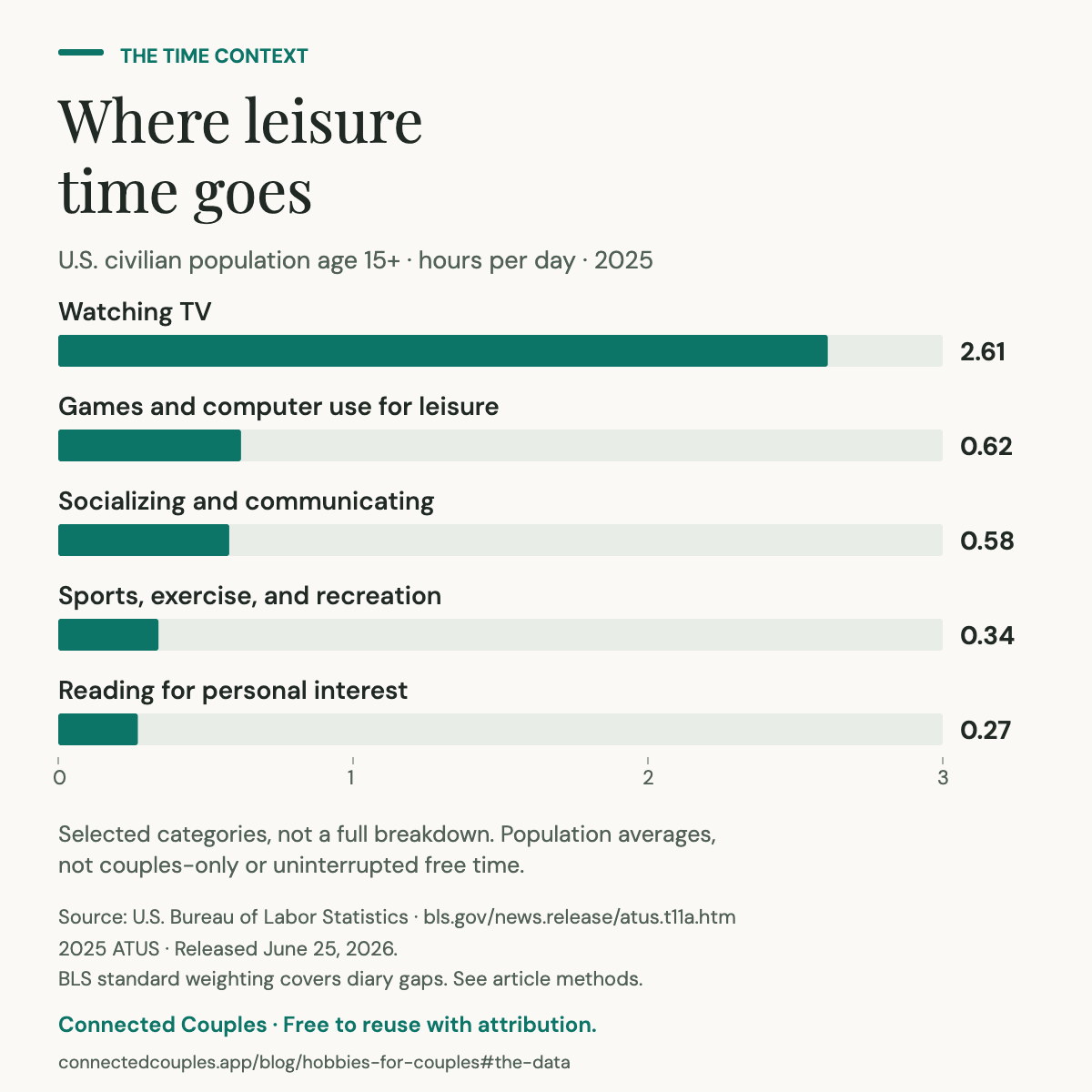
Americans age 15 and over averaged 2.61 hours a day watching television, 0.62 hours playing games or using a computer for leisure, and 0.27 hours reading. These figures describe how leisure time is spent across the population. They can prompt a useful question: is there a small part of our own routine we would both enjoy using differently? BLS, American Time Use Survey 2025, Table 11A.
| Activity | Hours/day |
|---|---|
| Watching TV | 2.61 |
| Games and computer use for leisure | 0.62 |
| Socializing and communicating | 0.58 |
| Sports, exercise and recreation | 0.34 |
| Reading | 0.27 |
These averages include people who did none of an activity on the diary day. They are not couples-only figures, recommended time budgets, or measures of shared hobbies. The chart shows selected categories, not a complete breakdown. It does not show that one hobby produces a better relationship than another.
Methodology and source limitations
BLS released these 2025 estimates on June 25, 2026. Because of the federal shutdown, time diaries for September 30 through November 11, 2025 were missing. BLS used its standard weights so available fourth-quarter diaries represent the quarter; the effect of the missing period cannot be quantified. Values above are transcribed from the published tables, not a new Connected survey. Read BLS’s collection note.
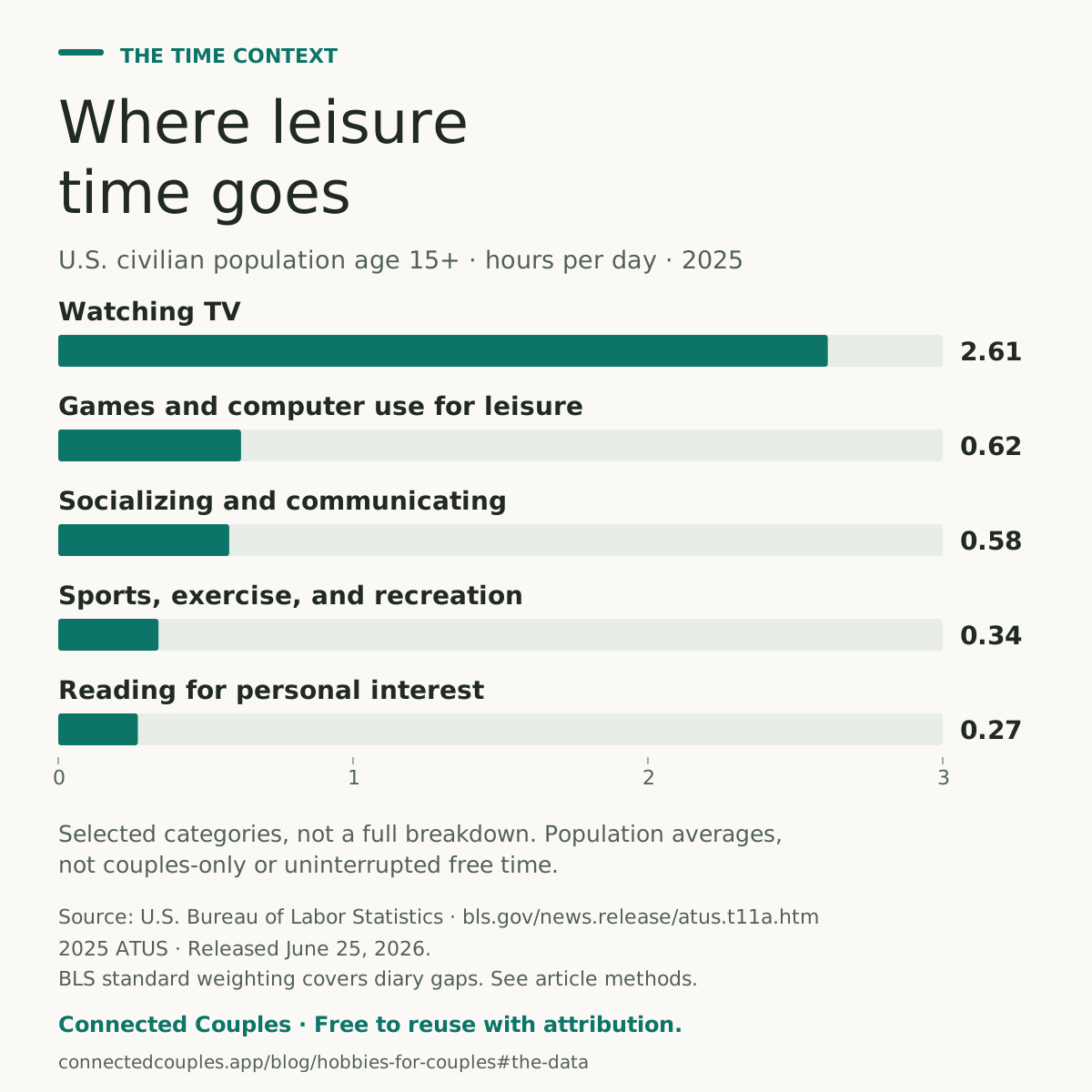
You may reuse Connected’s original chart with attribution. Cite this guide for the visualization and BLS for the data. Retain the year, population, and methodology note.
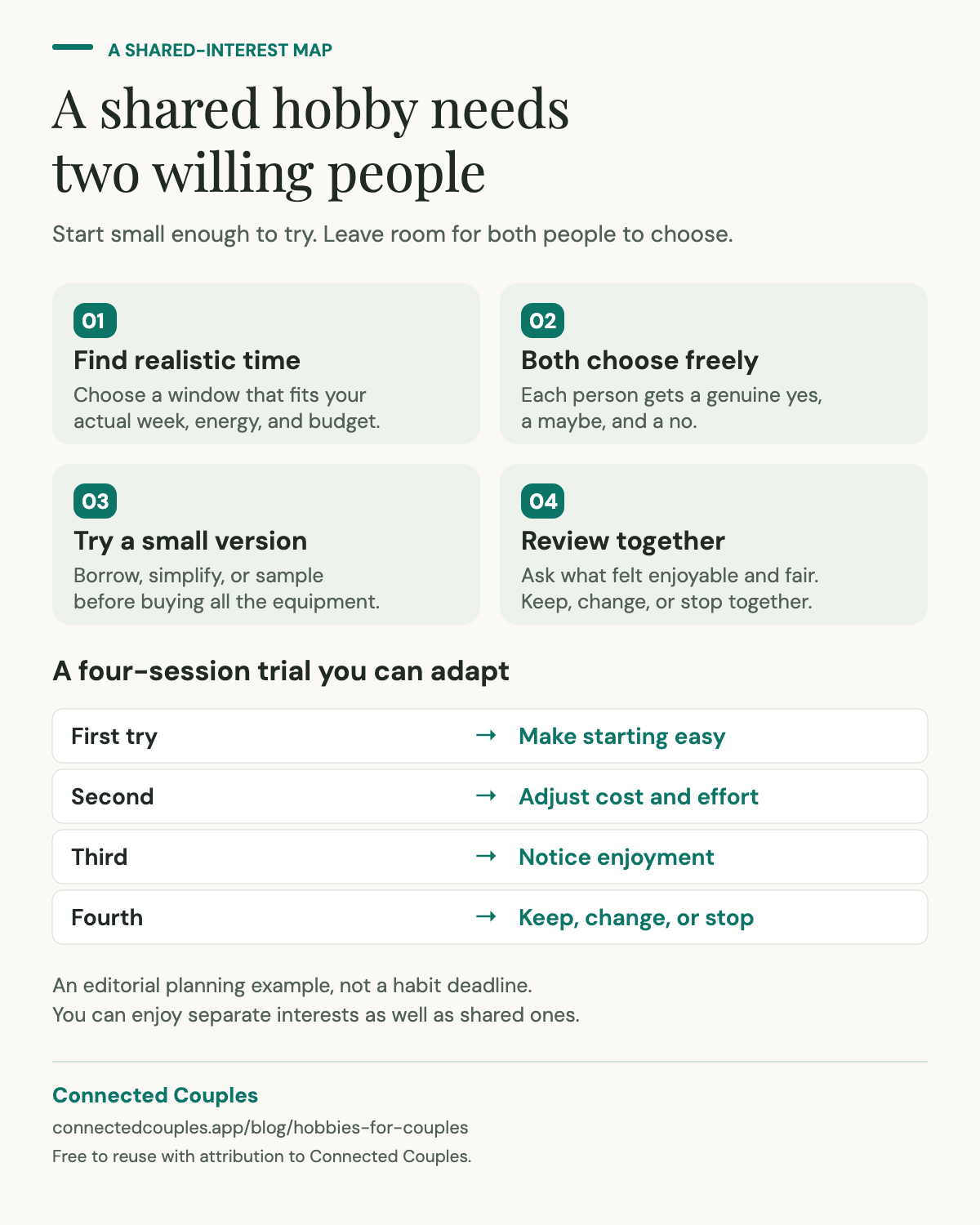
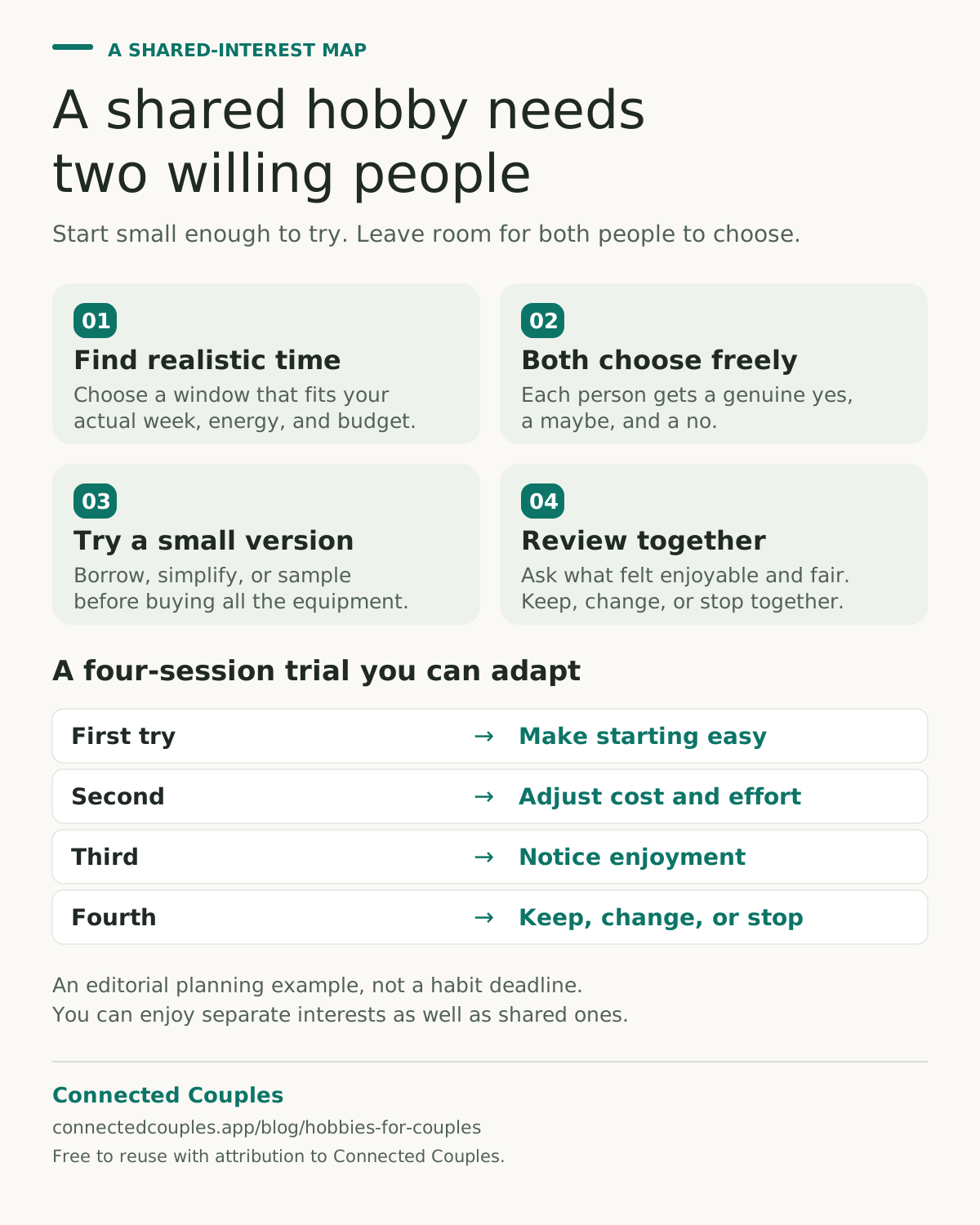
Share this visual with a link to this guide. The prompts and layout are original editorial work; they are not a validated assessment.
Keep the conversation going
Keep getting to know the person beside you
A hobby gives you something to share. Connected's daily questions and date-night tools offer more ways to spend intentional time together, including on days when you are not practicing your new interest.
Connected is available on iOS and Android, with free features and optional Premium. These browser notes do not transfer into the app. Connected does not replace therapy or medical care.
Frequently asked questions
What are good free hobbies for couples?
Reading books you already have, walking or rolling on accessible local routes, birdwatching, drawing with existing supplies, and singing can involve no new spending. Check what you actually have access to: transport, internet, library eligibility, and supplies can change the cost. Start with the version available to you.
How do we find a hobby if we have different interests?
Look for an experience you both want, such as relaxing outdoors or making something, rather than insisting on the same favorite activity. Try one small session that both accept. Different skill levels are workable when help is invited and each person gets to participate. Either person can say no.
How often should couples do a hobby together?
There is no required frequency. Choose a schedule you both welcome and can sustain, whether that is a short weekly session or an occasional class. Include preparation and care between sessions. If the arrangement keeps feeling burdensome, change its size or timing before assuming the hobby is wrong.
Is it okay for couples to have separate hobbies?
Yes. You can enjoy separate interests and still make room for shared time. You do not need to turn a favorite solo activity into a couple activity, and shared hobbies do not require identical tastes. Agree on how your time and spending fit together, while respecting each person's independent interests.
Sources and editorial notes
Written by Connected Editorial Team. Research and published expert excerpts support the points cited; the examples, prompts, filters, and plans are editorial tools. Kayla’s quoted words first appeared in the linked guides. Connected’s editorial team prepared this article and its original tools.
- Aron et al. (2000): shared novel activities and experienced relationship quality
Primary research on surveys and brief laboratory tasks; it does not establish a best hobby or a lasting effect from this guide's activities.
- BLS, American Time Use Survey 2025, Table 11A
Published June 25, 2026. Data and limitations are shown above.
- BLS notice on 2025 data collection