 Connected
The suitcase is still in the hallway when you realize you pictured different evenings. The traveler wants to sit down after a delayed journey. The partner at home has been watching the arrival time, ready to hand over dinner cleanup and leave the house. Each expected the reunion to make the week easier. Neither knew what the other expected the first hour to look like.
When a partner travels for work, connection depends on more than contact during the trip. Before departure, agree on household responsibilities, realistic availability and what happens when the traveler returns. Treat homecoming as a handoff between two people who have both had a week, rather than assuming arrival automatically resets the household.
This guide is about recurring business trips from a shared home. For couples living apart for an extended period, our long-distance relationship guide addresses that broader situation.
Evidence, with the context kept in
Time away from home has a cost beyond the travel itself.

What this does and doesn't tell us: A separate sample of travel managers also participated. This figure is from travelers, not their partners, and does not measure relationship conflict.
Put it to use: Ask about what each person carried during the trip before deciding who should rest or take over first.
Get the chart, data and citation
The numbers come from the source linked above; Connected created the chart. These are published statistics, not an original Connected study.
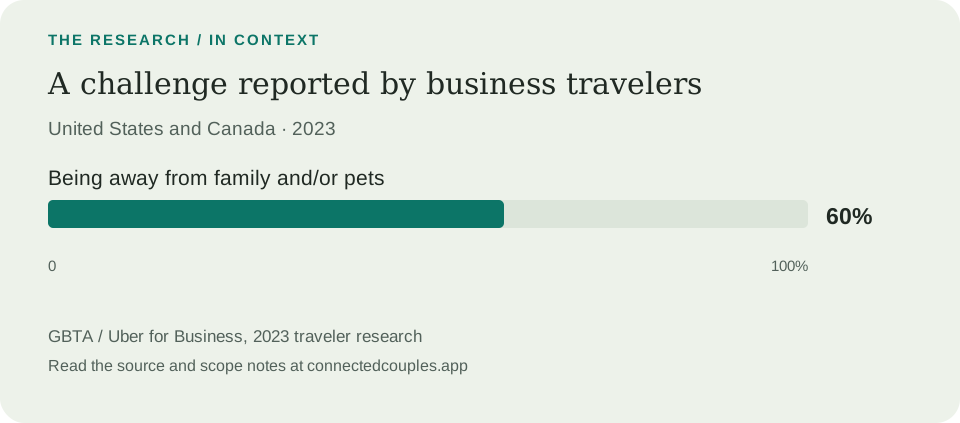
GBTA / Uber for Business, 2023 traveler research. United States and Canada · 2023. Chart by Connected Editorial Team, October 2, 2026. Please retain the source, date and scope when sharing.
Start with the two versions of the trip
The same dates can contain very different experiences. One person may spend them in airports, meetings and hotel rooms. The other may handle work, care, meals, pets and every unexpected household problem without the usual backup.
Ask each other two questions before you leave: “What part of this trip looks hardest for you?” and “What would make that part more manageable?”
Do not compete over whose week counts as work. The traveler may have little control over the itinerary. The partner at home may have little control over when something breaks or a care need changes. Both need a plan that reflects those limits.
If the trip involves children or other dependents, make arrangements appropriate to their needs. Do not assume a partner, relative or friend is available until they have agreed.
Make a departure handoff that reduces remembering
List what must happen while one person is away. Include planning and follow-up, not just the visible task.
Researcher Allison Daminger's study of cognitive household labor distinguishes anticipating needs, identifying options, deciding and monitoring. Based on interviews with members of 35 couples, it helps explain why “just tell me what to do” can leave considerable work with the person giving instructions. Those interviews weren't a study of business travel, but the distinction is useful when you divide responsibilities for a trip.
For a trip, the practical question is: who will notice, decide and follow through while someone is away? If the traveler will still handle a task remotely, confirm that their schedule and access make this realistic. Do not assign an urgent task to someone who will be unreachable in transit.
You can prepare some things before leaving: complete a promised errand, confirm a repair appointment or organize the information needed for a responsibility you already own. Avoid making departure preparation another list for the staying partner to supervise.
Use a four stage trip agreement

Read the graphic as text
The work-trip handoff
Before leaving → while away → back home
BEFORE DEPARTURE: Confirm the household handoff. Tasks, dates, access, realistic capacity, and backup.
DURING THE TRIP: Share essential changes. Ask before adding tasks. Adapt contact to capacity.
FIRST EVENING HOME: Return with a clear handoff. What is still open? Who owns it now? Both may be tired.
LATER REVIEW: Make the next trip easier. What was unclear or unfair? Change the plan together.
A return home is a second handoff, not an automatic reset.
Plan for four parts of the trip. Before departure, name responsibilities and backup plans. During the trip, use agreed contact and communicate changes. On the first evening home, acknowledge each other and make the immediate household handoff explicit. At a later review, discuss what to change before the next trip. Use the parts that fit your household and add anything the checklist misses.
| Stage | Question to answer together | Record this |
|---|---|---|
| Before departure | What must happen and who owns it | Tasks, owners and any confirmed backup |
| During the trip | What contact and availability are realistic | A contact plan and how to flag a change |
| First evening home | What does each person need first | Food, rest, immediate responsibilities and a time to reconnect |
| Later review | What should be different next time | One adjustment and who will arrange it |
Keep the note short enough to use. You don't need a detailed itinerary of every private moment. Share travel information that helps you coordinate, such as expected arrival and known unavailable periods, without treating the plan as surveillance.
Make contact predictable without promising constant access
Agree on a modest plan that fits the trip. It could include a brief message when the workday ends or a call when both people are genuinely free. Decide what happens if a meeting, household problem or delay makes that impossible.
A useful update contains a replacement expectation: “The dinner is running late. I won't manage our call. I'll send a message before I sleep, and let's talk tomorrow when we are both free.” Do not promise a precise time you are unlikely to control.
Keep urgent practical information easy to find. A changed collection time should not be buried in an affectionate message or a long work story. Equally, let some contact be about interest and affection rather than turning every exchange into an operations report.
If a delayed reply brings up an existing trust concern, discuss that concern directly at an appropriate time. More check-in demands will not necessarily resolve what the delay means to you.
Decide what happens after the bag is put down
Ask both people to describe a realistic arrival, including the possibility of delays. The traveler might need food and a short period to settle. The partner at home might need the traveler to take over a clearly identified responsibility as soon as they can safely do so.
Where time zones are crossed, distinguish travel fatigue from expectations about enthusiasm. The CDC describes jet lag as a temporary mismatch between the body's internal timing and the local time after rapid travel across time zones. That may affect sleep and daytime functioning. It is a reason to plan realistically, not a blanket exemption from responsibilities or a diagnosis to assign to your partner.
Decide what can wait. An unresolved relationship issue may need attention, but the doorway is rarely the only available opportunity. Name when you will return to it. Important safety or immediate care information cannot wait for the ideal mood.
Do not promise a romantic homecoming as payment for a difficult trip. Affection and sex remain choices. A warm acknowledgment, a practical handoff and an honest expectation can be enough for the first evening.
“The person coming home may need to recover, and the person who stayed may need relief. Talk about both needs before the suitcase lands in the hallway.”
Kayla Crane, LMFT
A Thursday arrival that needs a backup
Imagine Morgan travels regularly from Tuesday through Thursday. Taylor stays home and handles the dog, meals and the usual evening tasks. Morgan returns expecting a quiet dinner together. Taylor expects to hand over everything immediately and go out.
They move the conversation to before departure. Morgan completes the agreed food shop and confirms the dog's arrangements for Tuesday. Taylor identifies Thursday evening as the point when relief matters most.
They agree that if Morgan arrives as expected, Morgan takes the evening dog walk and cleanup while Taylor has time out. If the journey is delayed, Morgan sends an update as soon as the change is known. They identify a backup they can actually use rather than assuming Taylor will simply wait.
They save the longer catch-up for after both have had a chance to settle. At the later review, Taylor says that completing the shopping helped but did not cover an unexpected repair problem. For the next trip, they decide who will communicate with the repair service, including follow-up. The next departure note names the repair contact and the person who will follow up. That is one fewer loose end for Taylor to carry.
When the same resentment returns every trip
The traveler feels welcomed by a list of complaints. Separate the immediate handoff from the fuller conversation, and make sure that later conversation actually happens. Asking for a different time cannot mean asking never to hear it.
The staying partner feels invisible. Discuss the work that happened, including changed plans and decisions. Acknowledge a specific contribution, then consider whether the next trip needs a different division or additional support.
Recovery time belongs only to the traveler. Identify when the partner at home can also stop being the default person. The needs may differ, but both should be visible.
The travel schedule is no longer sustainable. A better ritual cannot create missing capacity. Discuss what flexibility might be available at work, which responsibilities can be simplified or whether outside help is feasible. Some constraints cannot be solved inside the couple's communication routine.
If remembering and managing have become a persistent imbalance beyond travel weeks, our guide to the mental load in relationships explores that broader issue.
Try it on a difficult day
When the flight delay uses up the home partner's last reserve
Fictional example
The traveler expected to take over bedtime. A delay makes that impossible, and the partner at home has already covered four nights. Neither a tired apology nor an instruction to be understanding supplies the missing help.
- Send the revised arrival time when you know it. Name the task that now lacks an owner.
- Check the backup you arranged: a willing relative, existing childcare, an easier dinner or dropping a nonessential job. Do not promise help that has not been confirmed.
- After arrival, agree on a specific relief window for the home partner and a realistic recovery window for the traveler. Put both in the calendar.
The useful review: Before the next trip, change the backup if it only works when every flight is on time.
Make it yours
Write a trip and homecoming handoff
Make the fallback as concrete as the arrival plan. Flight delays should not leave the partner at home guessing who owns the next task.
Your entries stay in this tab and are not sent by this worksheet. Download your draft before closing or reloading; it is not saved automatically.
Your draft to discuss together
Check that both people agree before treating this as a commitment. Blank items remain open questions.
Common questions
Should the person who traveled take over immediately?
Make the agreement based on actual capacity, safety and the responsibilities waiting at home. Avoid a universal rule. Specify the first task and the fallback if arrival or fatigue makes the original plan unworkable.
What if work trips are announced at short notice?
Keep a reusable checklist, then update only the parts that changed. Prioritize care coverage, time-sensitive responsibilities and the return plan before less important details.
What if we miss each other but always argue after the trip?
Compare the homecoming each of you pictured. You may be arriving with different needs and no shared handoff. If the conflict persists despite clearer planning, consider support with the recurring pattern rather than expecting another checklist to solve it.
Once the handoff is handled, try Connected and use a daily question to start a conversation beyond what happened to the flight or the laundry. Choose a moment when both of you have room to answer.
Sources & editorial notes
Published by the Connected Editorial Team, with a quote from Kayla Crane, LMFT. Examples are fictional. The worksheets and graphics are original editorial planning aids, not validated assessments or a substitute for professional care.
- GBTA / Uber for Business, 2023 traveler research
United States and Canada · 2023. A separate sample of travel managers also participated. This figure is from travelers, not their partners, and does not measure relationship conflict.
- study of cognitive household labor
Daminger 2019 original research defines cognitive household labor from interviews with members of 35 couples; no prevalence extrapolation or checklist validation.
- jet lag
CDC Yellow Book explains jet lag following rapid travel across time zones; no medication advice or diagnosis.