 Connected
The quick answer
Before having a baby, talk about whether you each want to become a parent, what timing means to you, how you would share everyday care, and what support you can actually count on. Discuss work, money, family boundaries, and personal freedom. Use differences to identify the next conversation or information you need; no score can determine readiness.
Start with whether you both want this
You might both say, ‘We want kids someday,’ while imagining entirely different lives. One of you pictures a baby next year and two working parents. The other pictures several more years together, then one parent at home. Neither picture becomes an agreement simply because you have never compared them.
Start before the logistics: does each of you want to raise a child? Give ‘no,’ ‘not now,’ and ‘I don’t know’ room to be real answers. A conversation about children should not become a campaign to make the less certain partner agree.
Shared planning does not remove bodily autonomy. Neither partner owes the other pregnancy, fertility treatment, or a particular decision about their body. A previous yes is permission to keep talking, not a promise someone is forbidden to reconsider.
These questions are for couples considering parenthood, whether or not you are married. They are conversation prompts, not a baby-readiness test. No total, matching-answer percentage, or completed checklist can tell you whether to have a child.
The Royal Women’s Hospital’s preparation guidance includes motivation, work, freedom, values, and support in this conversation.
How to use the questions without turning them into an interview
Choose one group for your first conversation. Write a few private notes before comparing answers, so the first person to speak does not accidentally set the answer for both of you.
After an answer, try: ‘What does that look like on an ordinary weekday?’ or ‘What experience makes that important to you?’ If you hear ‘I’m afraid I’ll disappear into parenting,’ spend time understanding that fear before proposing a schedule.
Keep three short notes: what we agree on, what remains open, and what we need to find out.
Some preparation needs outside information. Planned Parenthood recommends preconception care with a clinician once you decide to plan a pregnancy. Take questions about health, medication, fertility, pregnancy, and infant care to an appropriate clinician; you do not need to settle them through a couples discussion.
Free conversation planner
Leave with one clearer next step
Choose a question. Each person can add their own words, then decide what remains open. Write only what you both agree to include in a shared note.
This tool does not send or save your answers. Reloading clears them; a download saves a file on your device. Site analytics record page and app-link activity, not these notes. This is not a readiness score.
Our next parenthood conversation
Connected Couples · https://www.connectedcouples.app
A conversation draft, not an assessment. Both people can change their minds.
If the goal is shared, the remembering and initiating must be shared too. Write the ownership down before you discuss motivation.
Keep the answer open
36 questions before having a baby
1–6. Wanting a child and choosing timing
Answer about your own wishes before explaining what you think your partner wants. Enthusiasm, fear, and uncertainty can coexist; none should be edited out to keep the conversation comfortable.
- If nobody were expecting us to have children, what would each of us want our life to include?
- Which parts of raising a person appeal to you beyond pregnancy, babyhood, and family celebrations?
- When you say ‘someday,’ what are you waiting for: a practical change, more information, or a feeling you cannot yet name?
- What would you need to feel able to tell me ‘not yet’ or ‘I don’t want this’ honestly?
- Which reasons for our timing feel like our own, and which come from relatives, friends, or comparison?
- What do we each imagine we might miss about the path we do not choose?
7–12. The ordinary work of caring for a child
Imagine an ordinary Tuesday with work, errands, and tired people. These are expectations to discuss before parenthood, not instructions for how to care for a newborn.
- Looking at our current weekdays, where are we each imagining the hours of hands-on care would fit?
- Which responsibilities might quietly default to one of us because of our gender, work location, or family expectations?
- Who would notice that supplies are running low, arrange replacements, and make sure they arrive?
- How would we decide who interrupts work when childcare becomes unavailable, without assuming one job always wins?
- Which household standards could we lower, and which matter enough that we would plan time or help for them?
- How would we notice that our planned division of care had become unworkable and ask to change it?
13–18. Work, money, and the choices underneath them
Gather facts about your own circumstances. This is a conversation about expectations and tradeoffs, not a savings target or financial qualification for becoming a parent.
- What have we actually confirmed about each person’s leave, pay, flexibility, or study commitments?
- Which childcare costs and available hours would we need to check before calling our plan affordable?
- If one person considered reducing paid work, what would that person want us to understand about the personal cost?
- How would we protect both people’s say in household decisions if our incomes became very different?
- Which existing commitments would we be willing to change, and which are we each quietly assuming will continue?
- What change in work or household costs would prompt us to reconsider our plan together?
19–24. Family involvement and the home you want to create
Use examples rather than labels such as ‘strict’ or ‘relaxed.’ Two people can use the same parenting word while imagining very different behavior.
- What ordinary moment from your childhood would you want our child to experience, and what would you want to handle differently?
- When a child is upset or makes a mistake, what do you hope our response would teach them?
- Which traditions or beliefs would you want to share, and how would we respond if our child related to them differently?
- What limits would make visits and relatives’ involvement feel welcome rather than obligatory?
- If someone offered help with conditions we disliked, how would we decide whether to accept it?
- What would we want to agree about sharing a child’s photos and personal stories with other people?
25–30. Your relationship and your lives as individuals
Name what each person hopes to preserve without promising that nothing will change. Agreements about closeness must leave room for consent, changing capacity, and different needs.
- Which part of your identity would you be most afraid of losing in becoming a parent?
- How would we make personal time something both people can request, rather than something one person grants?
- What does support look like to you when you are overwhelmed: listening, taking action, quiet, or something else?
- How would we talk about affection and intimacy without turning either into an obligation?
- Which pattern in our current disagreements would we want to address before adding parenting responsibilities?
- How will we respect the bodily decisions of the person who would be pregnant while making room for both people’s feelings?
31–36. Support you can count on and plans that may change
Separate a kind offer from an agreed commitment. Leave space for circumstances you cannot predict and for support people to set their own limits.
- Who has offered practical help, and what have we actually asked them to confirm?
- If our first source of support became unavailable, where would we look next?
- Who could each of us talk to honestly outside this relationship without feeling we were betraying the other?
- What expectations would we need to revisit if a child’s needs differed substantially from what we imagined?
- If the route or timing of becoming parents changed, how would we decide what to share with others and what to keep private?
- What is the most important unanswered question we are leaving with, and what is one next step we both accept?
When your answers differ, identify what kind of difference it is
Not every disagreement needs the same response. These three descriptions are a practical way to organize your notes, not a clinical assessment.
- A practical gap: You both want a workable childcare arrangement, but your proposed hours do not cover your commute. Put the actual hours on paper and explore another arrangement.
- An unknown that needs information: One of you assumes leave will be paid; neither has checked. Assign someone to verify the policy before debating what you can manage.
- A core conflict: One person wants to become a parent and the other does not. A better budget or chore plan cannot resolve that difference. Do not frame having a child as a compromise someone should make to prove their love.
A useful follow-up is: ‘If the practical obstacle disappeared, would you want this?’ The answer may reveal a solvable concern, or it may reveal that the concern was easier to say than a deeper no. Accept either answer without cross-examination.
‘Not yet’ also deserves definition. It could mean finishing training, learning more, or not knowing whether parenthood is wanted at all. Agree on a conversation date, not a deadline for consent. The Royal Women’s Hospital notes that relationship counselling can help when deciding about children is difficult. The purpose is understanding each person’s position, not recruiting someone to persuade your partner.
An illustrative example: turn one assumption into a draft agreement
This couple and conversation are fictional, included only to illustrate the process. Maya and Eli both want a child. Eli says, ‘We have childcare covered because my mum offered.’ Maya says, ‘I thought she meant occasional babysitting. I’m worried I’ll have to reduce my hours when that falls through.’
They have found an unknown about support and a practical concern about work.
They write this draft preparation agreement:
- Question to resolve: Could we cover our working hours without assuming Maya will reduce hers?
- Owner: Eli will ask his mum whether she wants a regular role, which hours she could offer, and what limits she would need. A no is acceptable.
- Back-up: If Eli cannot have that conversation this week, he will say so and propose another date. Maya will gather two local childcare options as alternatives, including hours and current prices; neither will book yet.
- Working assumption: Family care remains unconfirmed. Neither person’s work hours change by default.
- Revisit: Next Sunday, compare the information and mark any remaining gap. Reopen the plan if availability or work arrangements change.
This is a draft, not evidence that their future arrangement will work. Its value is that it replaces ‘We’ll manage’ with a question, a person responsible for the next step, and a date.
For your own version, keep it to one issue at a time. Write: We currently expect ___. We still need to know ___. The owner is ___. If that step is blocked, our back-up is ___. We will revisit on ___.
Before your next conversation, bring whatever answers the specific unknown: an employer’s leave information, childcare opening hours, or a support person’s actual offer. The UF/IFAS SMART Couples handbook includes comparing work and childcare arrangements when planning for children.
Numbers worth citing · 2025 data
Why everyday time belongs in the conversation
Employed adults living with a child under six averaged 3.18 hours a day in leisure and sports, compared with 4.53 hours among employed adults without household children under 18. The difference is 81 minutes a day, calculated from those published averages. It is a reason to discuss time and care responsibilities before a baby arrives. BLS, American Time Use Survey 2025, Table 8B.
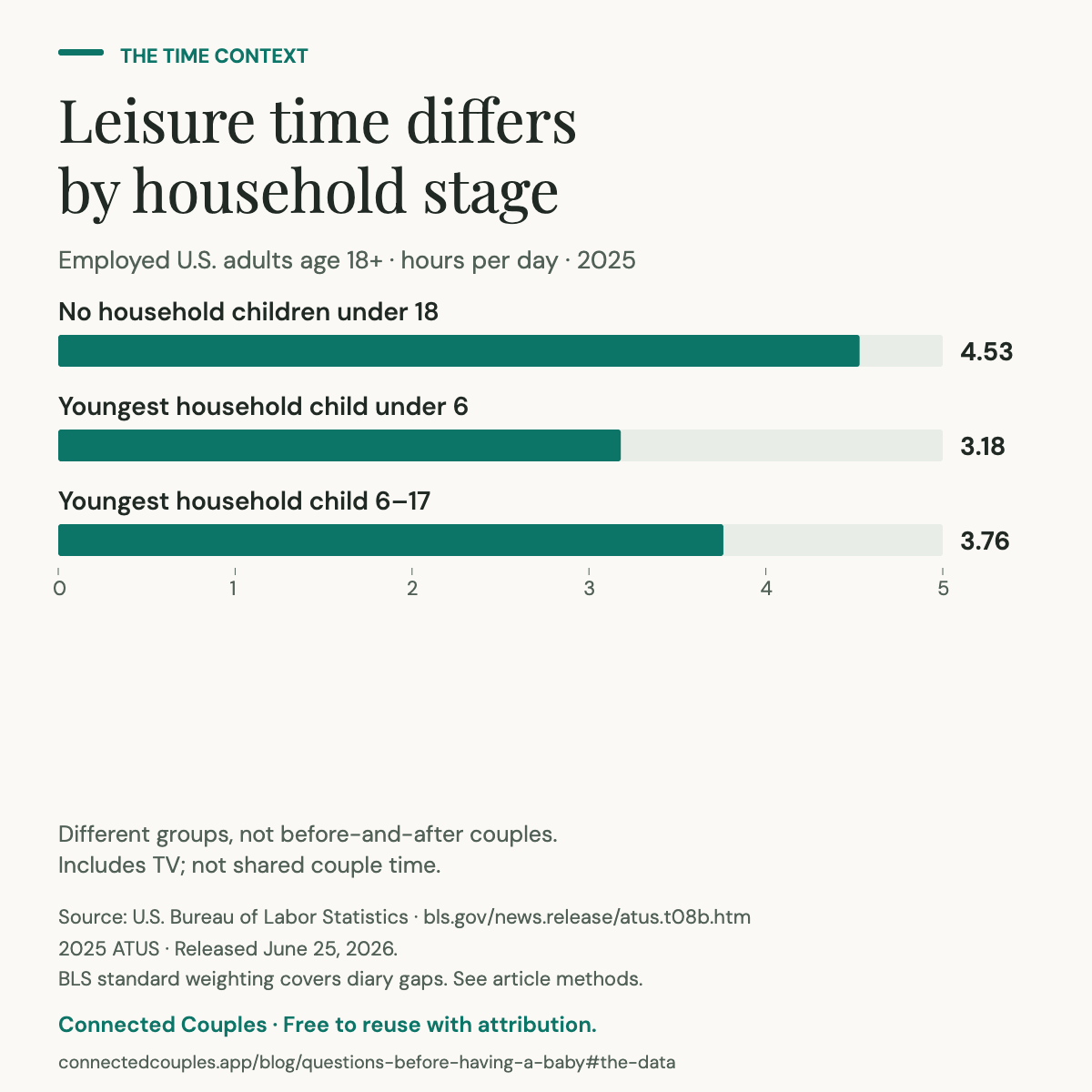
| Household group | Hours/day |
|---|---|
| No household children under 18 | 4.53 |
| Youngest household child under 6 | 3.18 |
| Youngest household child age 6–17 | 3.76 |
These are different population groups, not the same couples measured before and after a baby. The figures do not establish that a baby causes an 81-minute loss. Leisure includes television and individual activities; it is not uninterrupted free time or time spent together. Primary activities do not capture all simultaneous care responsibilities.
Methodology and source limitations
BLS released these 2025 estimates on June 25, 2026. Because of the federal shutdown, time diaries for September 30 through November 11, 2025 were missing. BLS used its standard weights so available fourth-quarter diaries represent the quarter; the effect of the missing period cannot be quantified. Values above are transcribed from the published tables, not a new Connected survey. Read BLS’s collection note. Calculation: (4.53 − 3.18) × 60 = 81 minutes. This descriptive difference is not a causal estimate.
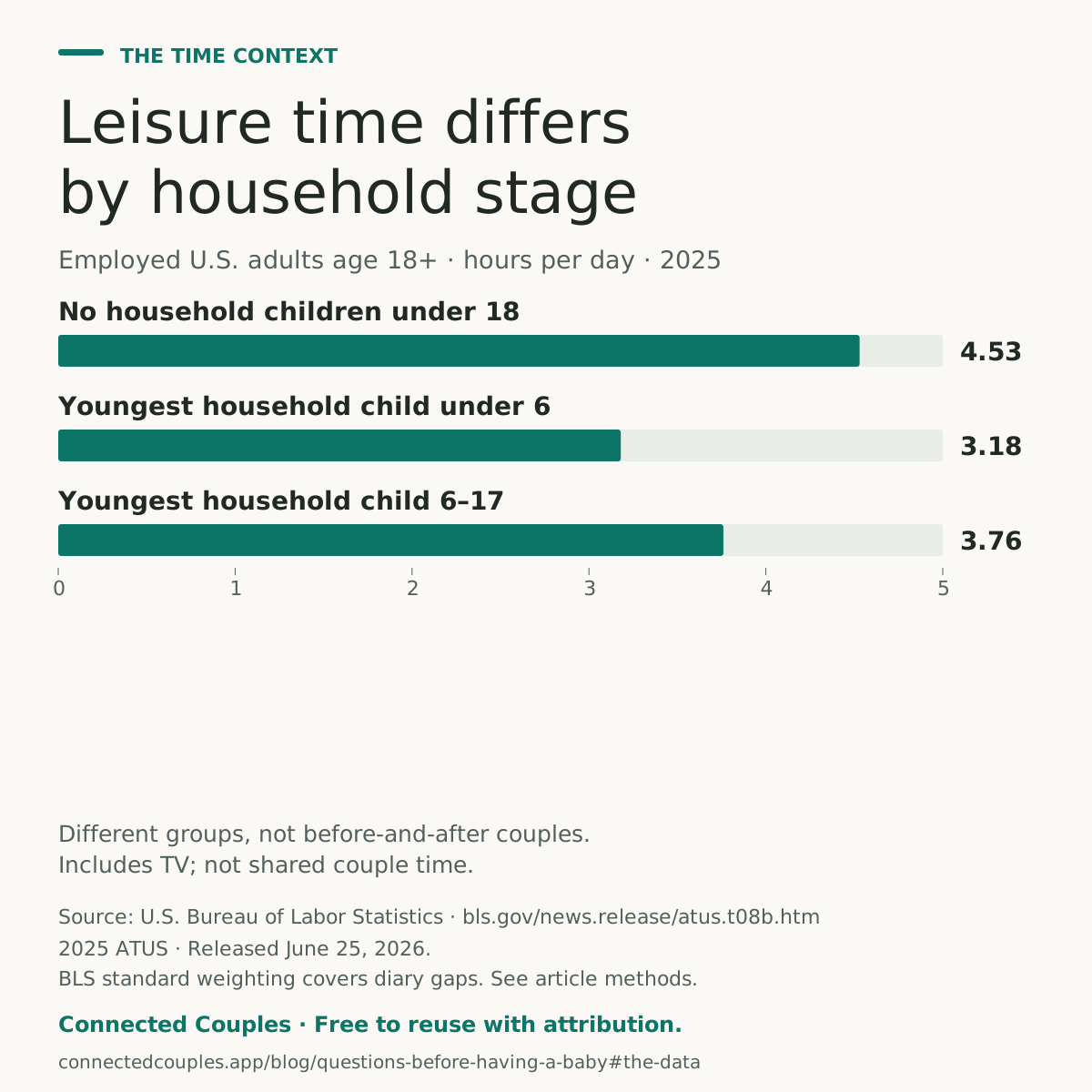
You may reuse Connected’s original chart with attribution. Cite this guide for the visualization and BLS for the data. Retain the year, population, and methodology note.
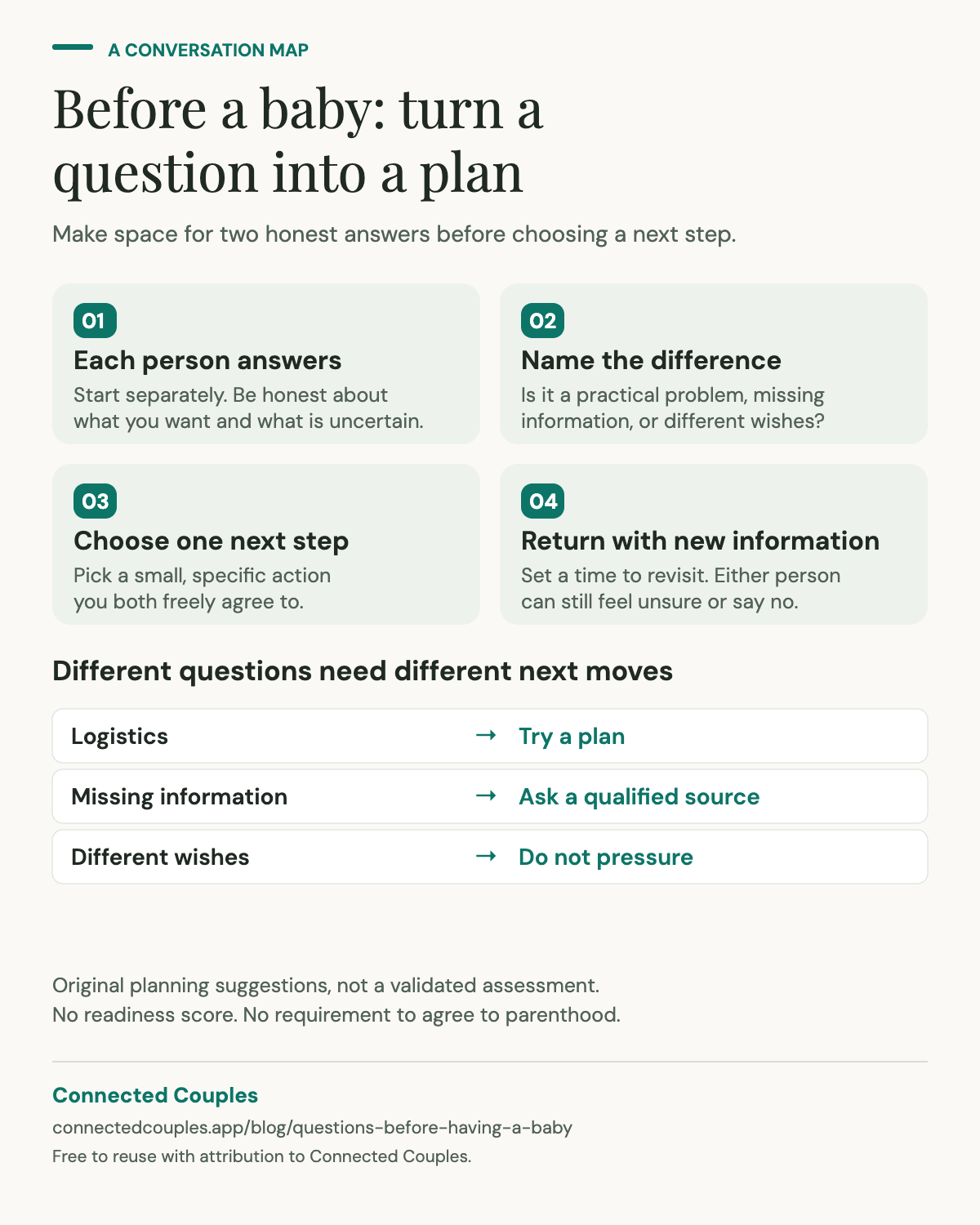
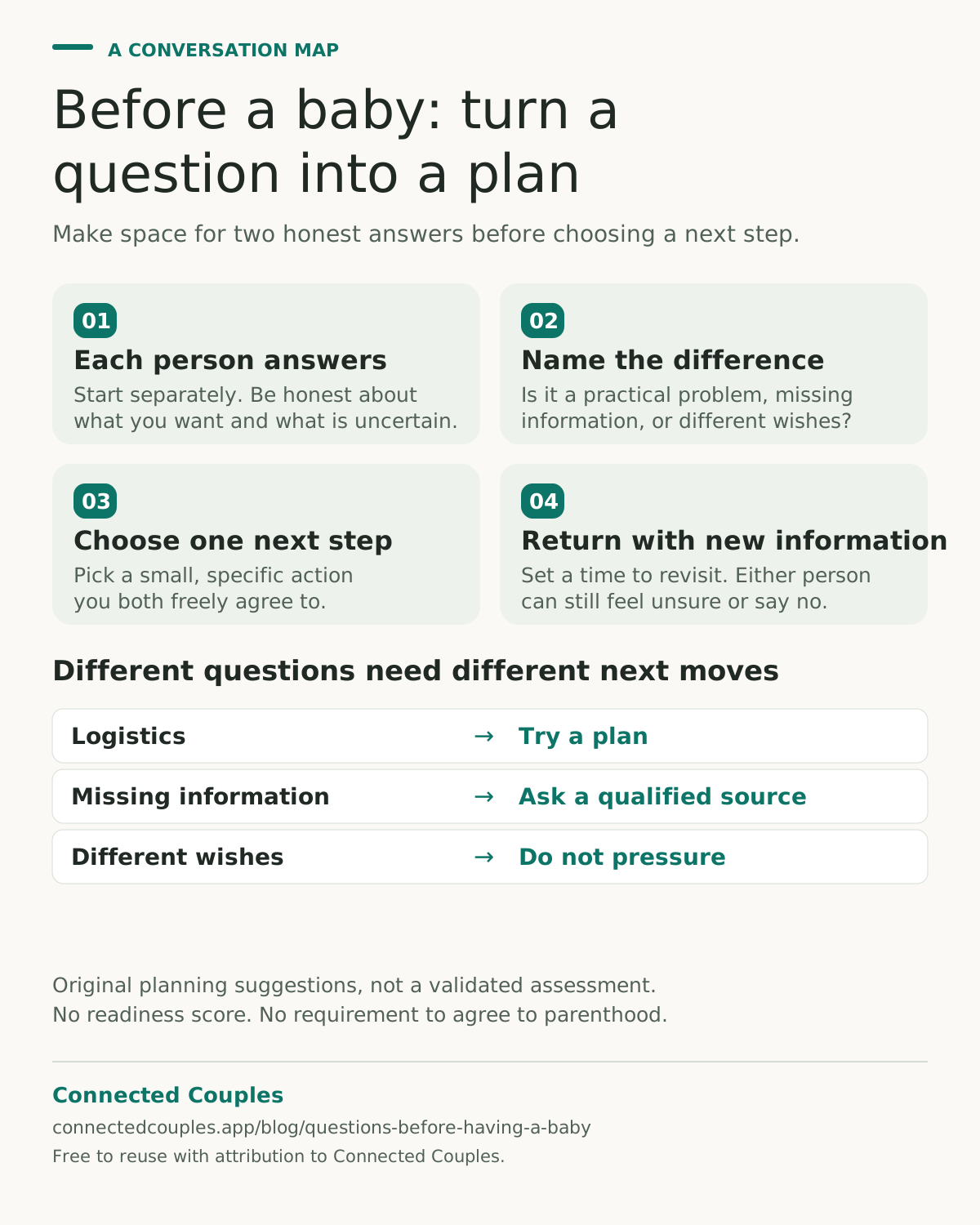
Share this visual with a link to this guide. The prompts and layout are original editorial work; they are not a validated assessment.
Keep the conversation going
Keep making space to understand each other
Use Connected’s daily questions to keep learning about each other, one conversation at a time. Download the app to start a regular space for the things you want to talk about.
Connected is available on iOS and Android, with free features and optional Premium. These browser notes do not transfer into the app. Connected does not replace therapy or medical care.
Frequently asked questions
What is the most important question to ask before having a baby?
Start with whether each of you wants to become a parent, freely and honestly. Shared excitement about a baby does not automatically mean shared expectations about raising a child. Once both people want to explore that future, talk about the daily responsibilities and support it would involve.
What if my partner wants a baby and I am unsure?
Describe what unsure means for you: a specific concern, unanswered questions, or uncertainty about wanting parenthood itself. You do not need to promise that more time will produce a yes. Agree on a next conversation if that feels useful, with no obligation to change your answer.
Do we need to agree on every parenting question first?
You do not need matching opinions on every future detail. You do need to take differences seriously, especially about wanting children, consent, and responsibilities one person expects the other to carry. Distinguish a practical issue you can investigate from a conflict about the life each person wants.
Can these questions tell us whether we are ready for a baby?
No. They can make expectations and open questions easier to see. They cannot predict your child’s needs, certify your relationship, or determine medical readiness. Bring health and pregnancy questions to a clinician and use this list for your conversation as partners.
How should we end the conversation if we have not decided?
Name what you understand better, what remains open, and whether there is a useful next step. For example: ‘We both want more information about leave; I will ask this week, and we will talk Sunday.’ If the uncertainty is about wanting a child at all, leave it named without manufacturing a practical assignment.
Sources and editorial notes
Written by Connected Editorial Team. Research and published expert excerpts support the points cited; the examples, prompts, filters, and plans are editorial tools. Kayla’s quoted words first appeared in the linked guides. Connected’s editorial team prepared this article and its original tools.
- Planned Parenthood: What should I think about before raising a child?
Patient education on parenting expectations, practical support, and seeking preconception care.
- The Royal Women’s Hospital: Am I ready?
Questions about motivation, work, freedom, values, and support; discussion and counselling resources.
- UF/IFAS SMART Couples Florida Marriage Handbook
The Managing Children section includes comparing work and childcare arrangements.
- BLS, American Time Use Survey 2025, Table 8B
Published June 25, 2026. Data and limitations are shown above.
- BLS notice on 2025 data collection